6 min read • September 21, 2026
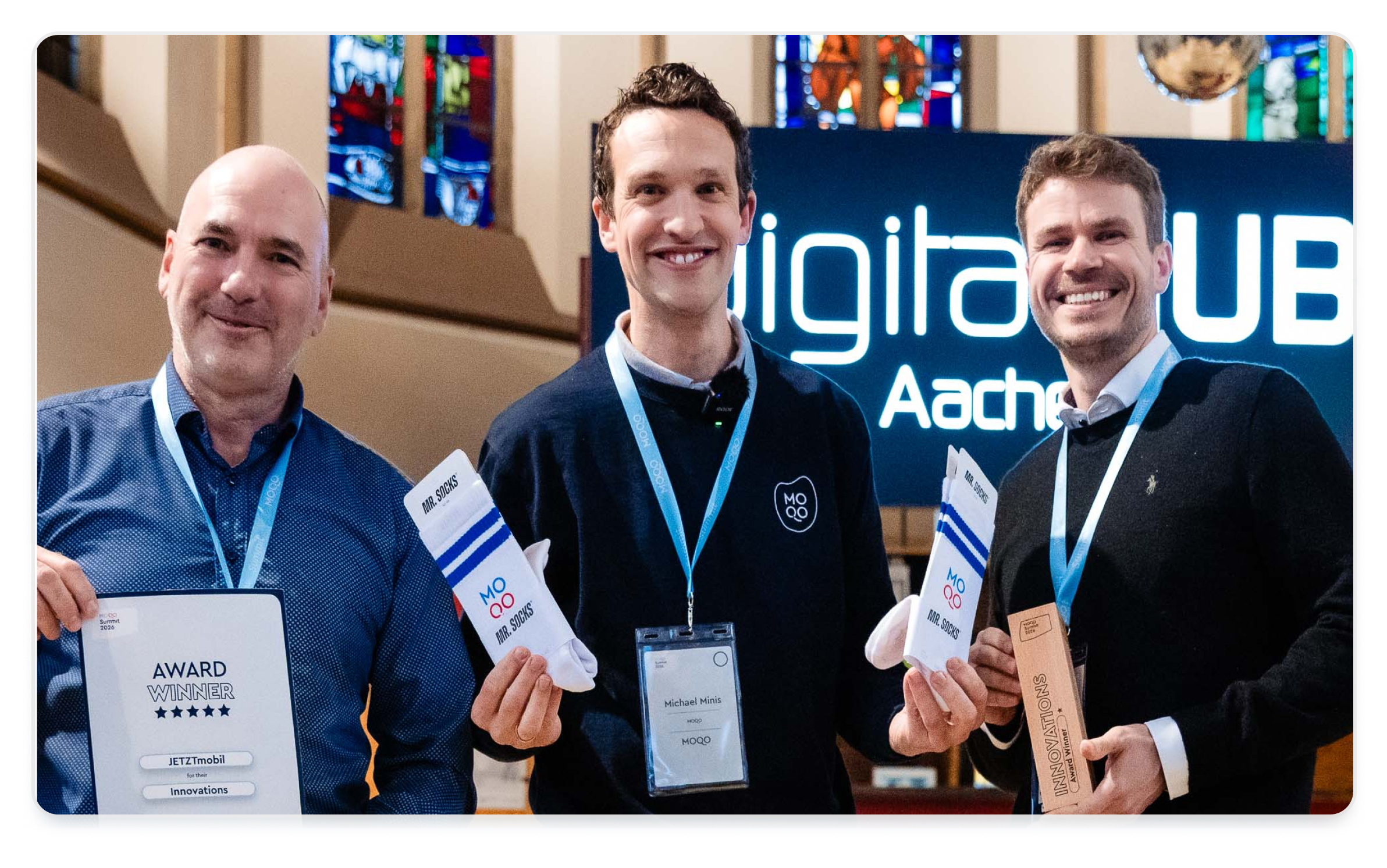
JETZT mobil does not rely solely on public car sharing but supplements its offerings with rental cars and car subscriptions. Its affiliation with the PS Union car dealership group is a significant advantage, although the concept of combining short- and long-term reservations can, in principle, be implemented even without the backing of a car dealership. At the MOQO Summit 2026, JETZT mobil won the Innovation Award for its integration of different business areas. In this article, you’ll learn how this works in practice.
Best Practice
JETZT mobil, part of the PS Union car dealership group, uses the MOQO car sharing software to offer three different mobility services in and around Halle an der Saale: public car sharing, repair shop replacement cars, and car subscriptions. This is made possible by a flexible fleet logic, in which vehicles equipped with on-board units (OBUs) switch between carsharing and service rental cars as needed, while car subscription vehicles are permanently assigned. The connection to the dealership group provides economic advantages, such as cost-effective vehicle procurement and streamlined operational processes. Looking ahead, JETZT mobil plans to expand the service rental car model to additional locations within the dealership group, pilot the public car sharing service in smaller surrounding towns, and develop new stations in collaboration with the city of Halle. This article explains how the model works in detail and why, according to JETZT mobil, it can be replicated even without a connection to a dealership group.
In 2015, JETZT mobil launched a public car sharing service in Halle an der Saale under the umbrella of the PS Union car dealership group. The service is station-based and offers 65+ vehicles distributed throughout the city of Halle - including 5 minibuses, 6 vans, and 8 XL vans. Customers include both private individuals who want to do without a personal (second) car, as well as companies, municipal governments, and organizations that want to provide mobility for their employees and members.
For just over 12 months, JETZT mobil has also been offering 3 vehicles in Bad Lauchstädt. This is a small town with a rather rural character. This is made possible by funding from Nahverkehrsservice Sachsen-Anhalt GmbH in cooperation with the state of Saxony-Anhalt. The pilot project aims to introduce carsharing to rural areas and, after a modest launch phase, is already being very well received.
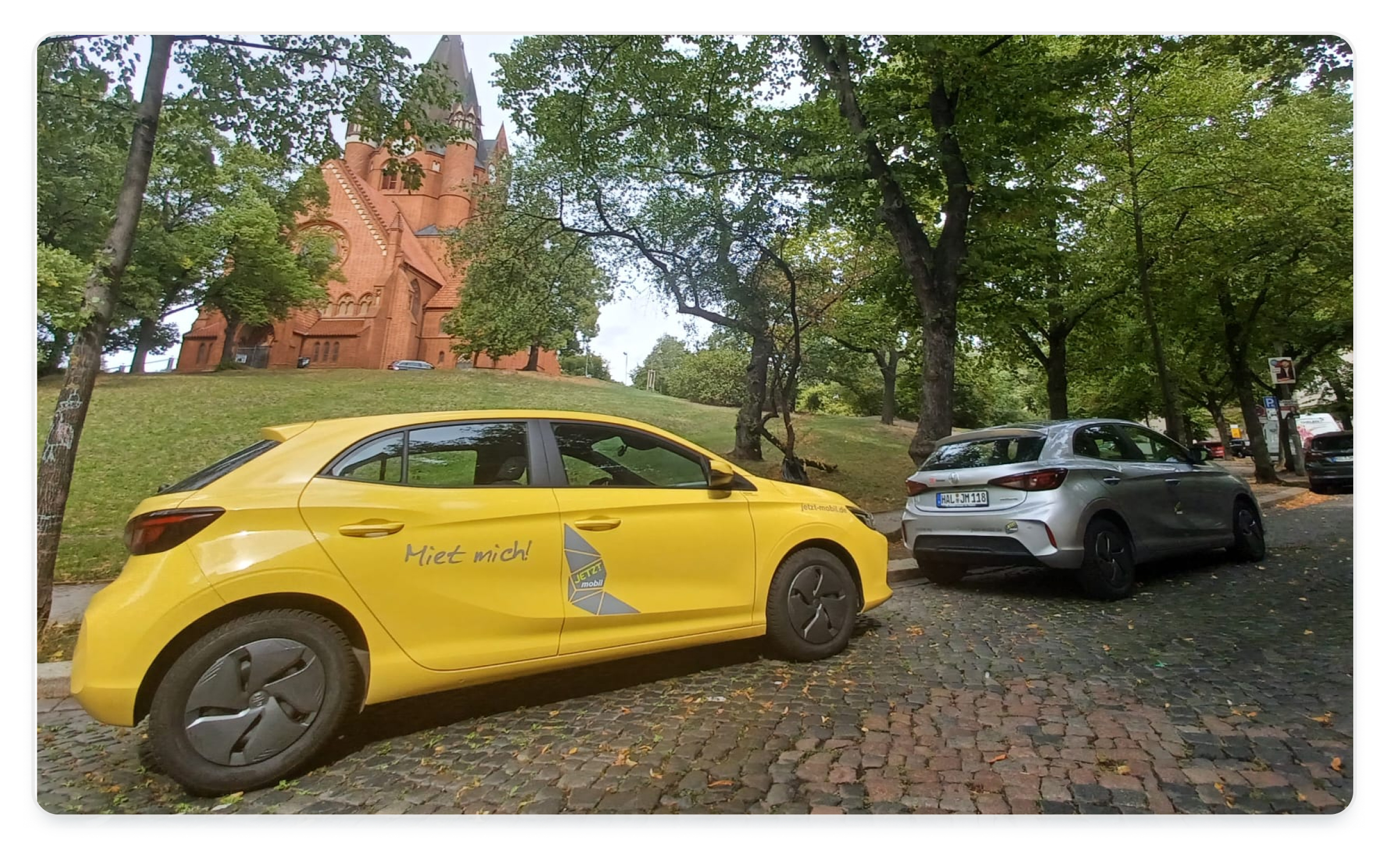
The car subscription service was introduced to address a different need: Thanks to its integration into the Autohaus Group, JETZT mobil is able to provide vehicles through long-term rentals to meet customer needs that arise when purchasing or leasing a vehicle. This helps bridge delivery times. Larger companies often use the car subscription service to ensure new employees have transportation before company car policies take effect.
According to Ronny Kaschta, Head of Car Rental and Logistics at JETZT mobil, the idea of offering replacement vehicles to customers of the in-house repair shop via the same platform was part of the plan from the very beginning, but initially could only be implemented manually. For just under a year now, the service rental car model has also been running (almost) fully automatically via MOQO. This service is already available at three of the dealership’s locations in Halle, and Nordhausen has recently been added as a fourth, smaller location in the surrounding area.
The result: There are currently 65+ vehicles in the public car sharing fleet, almost 40 additional vehicles used as service rental cars, and around 20 in the car subscription program.
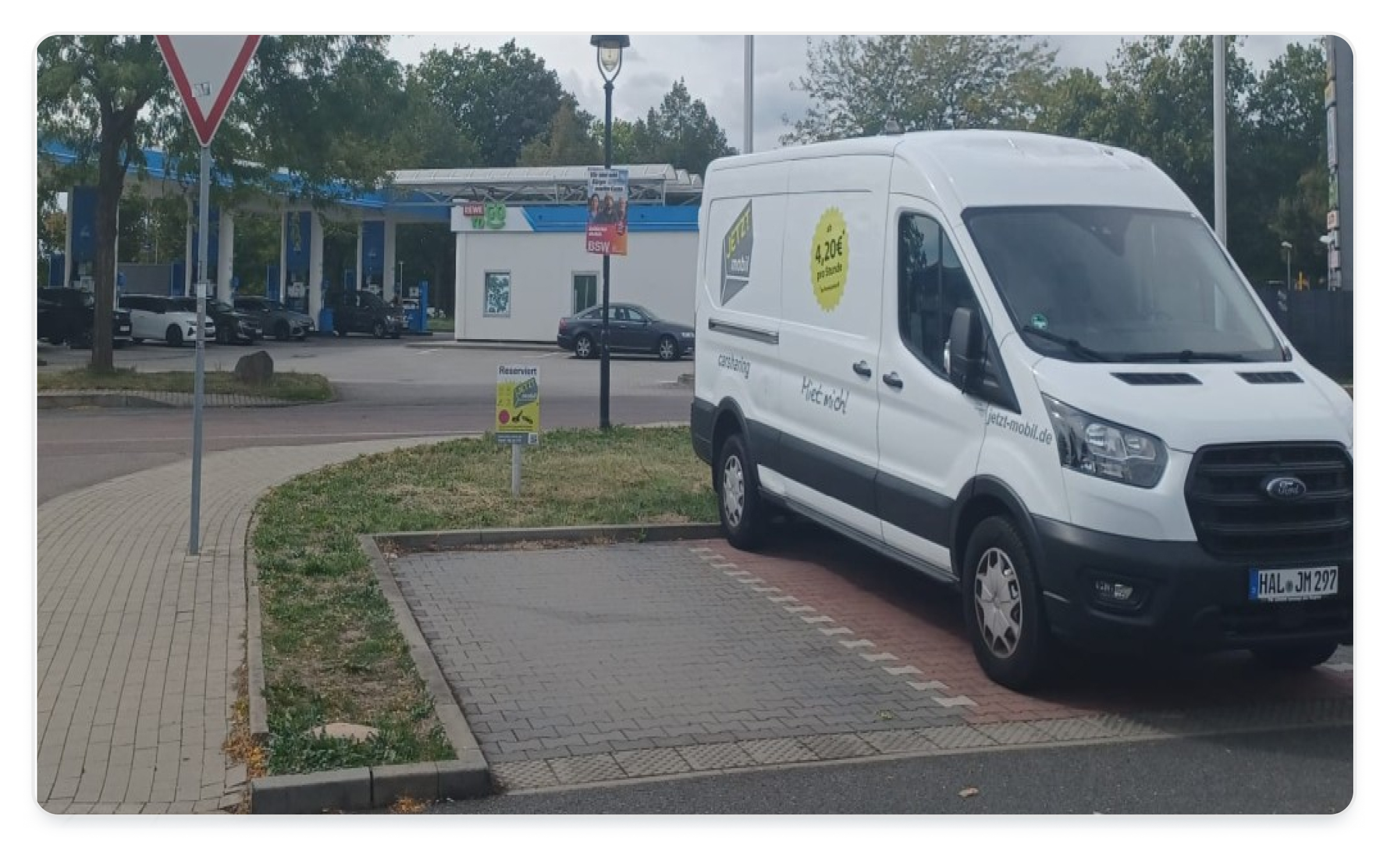
JETZT mobil now offers “the full range of four-wheeled mobility from a single source,” as Ronny Kaschta puts it - for private and business customers in Halle and the surrounding area. The additional use cases expand the target audience and have a positive impact on vehicle utilization and, consequently, profitability. Currently, utilization in public car sharing stands at around 20%. In the service rental car business, the average across the four locations is even higher, although the location in Nordhausen - which is still in the start-up phase - is currently bringing the figure somewhat down. But even here, rapid growth is already evident.
For customers, this opens up possible paths through all three offerings: Anyone who brings their own car to the repair shop and receives a service loaner car automatically becomes a user of the car sharing platform and can also access vans or minibuses as needed. Anyone who has ordered a new vehicle and is waiting for delivery can bridge the gap with a car subscription. Anyone who learns that repairing their own vehicle is no longer cost-effective will receive a car sharing offer instead of a new car, depending on their personal situation.
The numbers show that this approach works: On average, up to 10 new customers are added each day across all three business segments.
From minutes to several months: Offer short- and long-term use with one fleet →
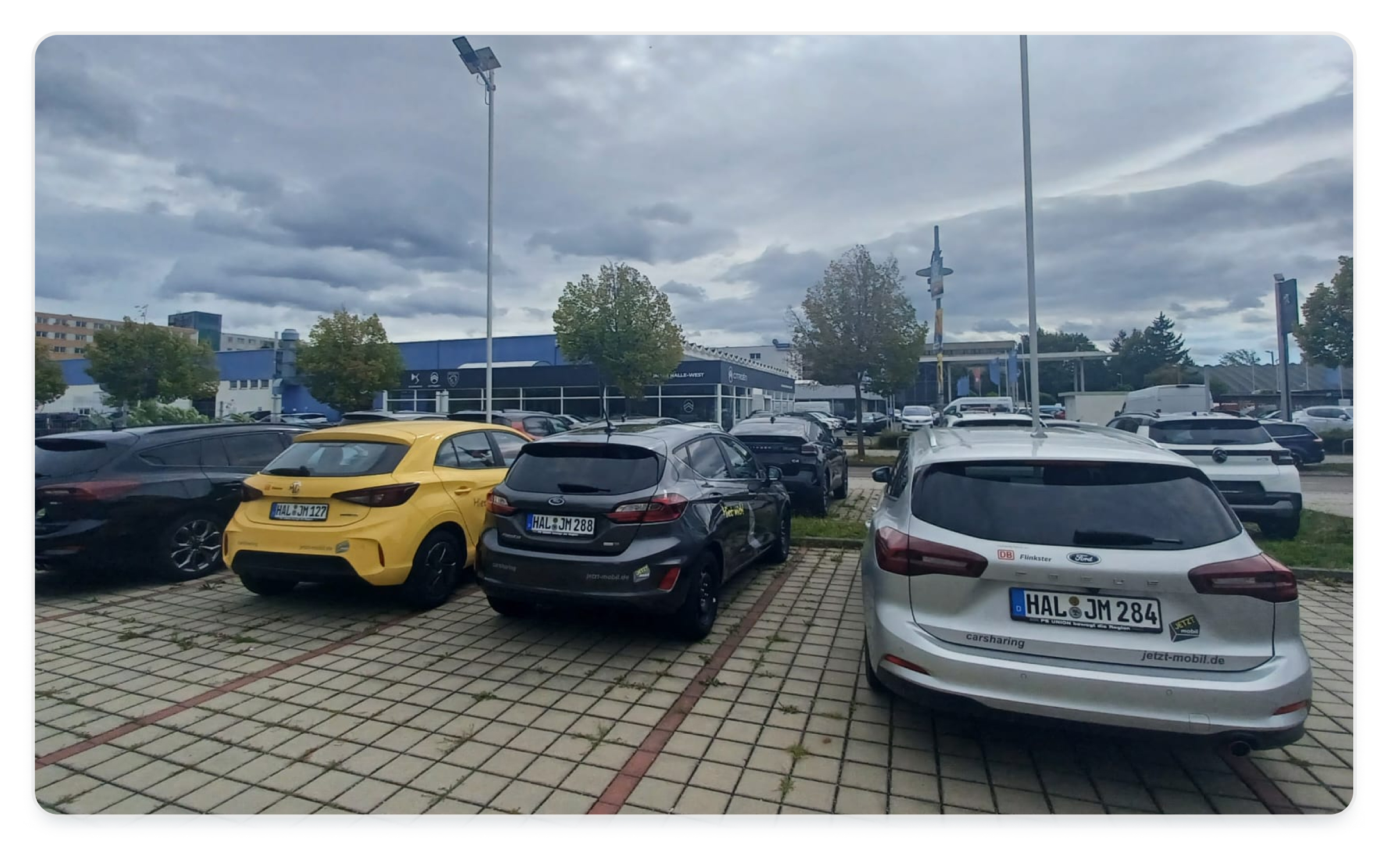
Thanks to its affiliation with the PS Union car dealership group, JETZT mobil benefits from streamlined processes: Vehicles are sourced through its own sales department; repairs are handled by the affiliated repair shop, including bodywork and paint jobs; the car wash is located on-site; and used vehicles are returned to the company’s own used-car market.
This leads to significantly streamlined decision-making pathways and processes in day-to-day operations, as well as cost savings through the leveraging of synergies in areas such as purchasing, maintenance, and cleaning.
Furthermore, from JETZT mobil’s perspective, the car subscription service only truly makes sense when combined with the car dealership’s ability to procure vehicles at a low cost. After all, the subscription must be offered at a price that customers are willing to pay and that remains financially viable for the provider.
For JETZT mobil, the combination of carsharing, car subscriptions, and rental cars is thus a business advantage that stems from its ties to the car dealership.
However, according to Ronny Kaschta, the principle behind this - offering both short- and long-term use from a single source and thereby covering various use cases - can also be applied without the backing of a car dealership. One possibility, for example, is partnering with independent repair shops, to which a car sharing provider could supply service replacement vehicles.
Whether car subscriptions make sense even without discounted vehicle purchases is something each provider must calculate and decide for itself on a case-by-case basis.
In the fall of 2024, JETZT mobil migrated its offerings to the MOQO platform as a Flinkster partner. Today, the provider offers all three business segments through the MOQO platform - each with the appropriate configuration.
The car subscription is set up as a long-term service with monthly billing. Charges for repair shop replacement cars and car sharing vehicles are typically billed only after use.
In this setup, the car sharing service operates as a station-based offering, while the repair shop replacement cars are configured as a free-floating service. As a result, follow-up reservations cannot be made for the replacement cars - which is important because the duration of repairs often cannot be planned with certainty. Sharing customers, on the other hand, can reserve vehicles in advance at their desired station. This gives them the predictability they need in their daily lives - especially when the sharing service is intended to replace a private (second) car.
From car dealership to local mobility partner: The building blocks for new business models →
The provider broadly divides the vehicle fleet into two categories: those with and those without an on-board unit (OBU).
Part of the fleet is equipped with OBUs and is used for public car sharing or as workshop replacement vehicles. If necessary, these vehicles can be flexibly reassigned to the other division with minimal effort: A vehicle can serve as a workshop replacement today and be parked at a public station tomorrow, depending on where it is needed at the time.
Another portion of the fleet operates without an OBU and is used for car subscriptions. Since these vehicles are leased for an extended period, an OBU is not necessary for JETZT mobil at this time.

The biggest growth driver for JETZT mobil right now is the rental car service business. If all replacement vehicles at a location are booked (which happens quite often), the team quickly brings car sharing vehicles from the city to the repair shops. If the new location in Nordhausen gets off to a good start, Ronny Kaschta says additional locations at other branches of the dealership group are a possibility.
In Nordhausen, in addition to the rental cars, a van is also available on a trial basis as a public car sharing vehicle. If it is well received, JETZT mobil may expand its public car sharing service to other small towns in the surrounding area - anywhere the car dealership group already operates its own locations and repair shops.
In the city of Halle, however, consolidation is needed first: JETZT mobil is analyzing which car sharing stations are performing well and which are not, whether they have the right vehicles available, and whether individual stations can be closed entirely - with the goal of improving profitability.
Thanks to many years of excellent cooperation, JETZT mobil can now work with the city of Halle to identify where new stations can be built. One advantage is that the city has recognized the benefits of carsharing and is taking a flexible approach. Established providers can largely choose their own locations; the city handles signage for suitable sites, and the Public Order Office oversees parking enforcement - and there are no rental costs.
Consolidation, new stations, more locations in the surrounding area - JETZT mobil is continuing to expand precisely what earned it the Innovation Award at the MOQO Summit 2026: one fleet serving three business divisions.