
6 min read • August 11, 2026
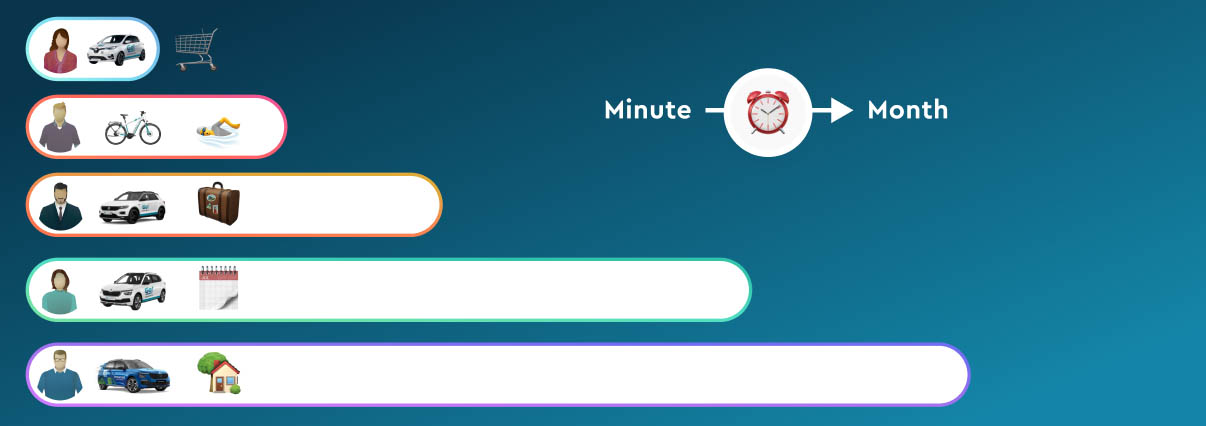
Those who strictly define themselves as “car sharing” operators often end up adopting the limitations of this category as perceived by users: relatively short booking durations, spontaneous trips, and a pricing structure based on minutes or hours. Demand that doesn’t fit this pattern quietly shifts to other providers who position themselves as traditional car rental companies. Yet a single vehicle can serve both a short trip to the grocery store and a 6-month long-term rental required for professional reasons. Sharing providers can open up their own fleets to a significantly broader spectrum of demand. This article shows how this demand can already be met today using the existing fleet and the MOQO platform.
Education
Car sharing operators can meet additional demand with the same fleet - not just the traditional short-term bookings of a few hours, but also extended weekends, family vacations lasting several weeks, or replacement vehicles for several months. Demand is not driven by categories such as car sharing or rental, but by time frames, ranging from a quarter of an hour to a three-month contract. From an economic standpoint, a single booking lasting several weeks is at least as profitable as several short bookings, for example, because there is less downtime, the risk of support cases decreases, and revenue becomes more predictable thanks to a fixed rate. By combining short- and long-term use, the MOQO platform already supports this model today.
Each category - car sharing, car rental, car subscriptions, and so on - automatically comes with its own set of assumptions: for car sharing, for example, short trips, spontaneous bookings, and billing by the minute or hour. This is exactly right for core operations.
At the same time, experience shows that demand isn’t categorized by type but by time frame - ranging from an hour to a day, a weekend, a two-week vacation, or a three-month contract. The same customers who make a car sharing reservation today also inquire about longer time frames elsewhere, such as for replacement vehicles or car subscriptions.
However, as long as the available booking period is limited exclusively to shorter time frames, providers can hardly accommodate these requests. This demand does not disappear as a result; it simply shifts to a provider that covers exactly that time frame.
Any company that sees itself as a car sharing provider has built a fleet around a specific identity. The next step may be to expand that identity. After all, a fleet can cover this entire spectrum as soon as it is no longer artificially subdivided.
How JETZT mobil combines car sharing, car subscriptions and replacement vehicles →
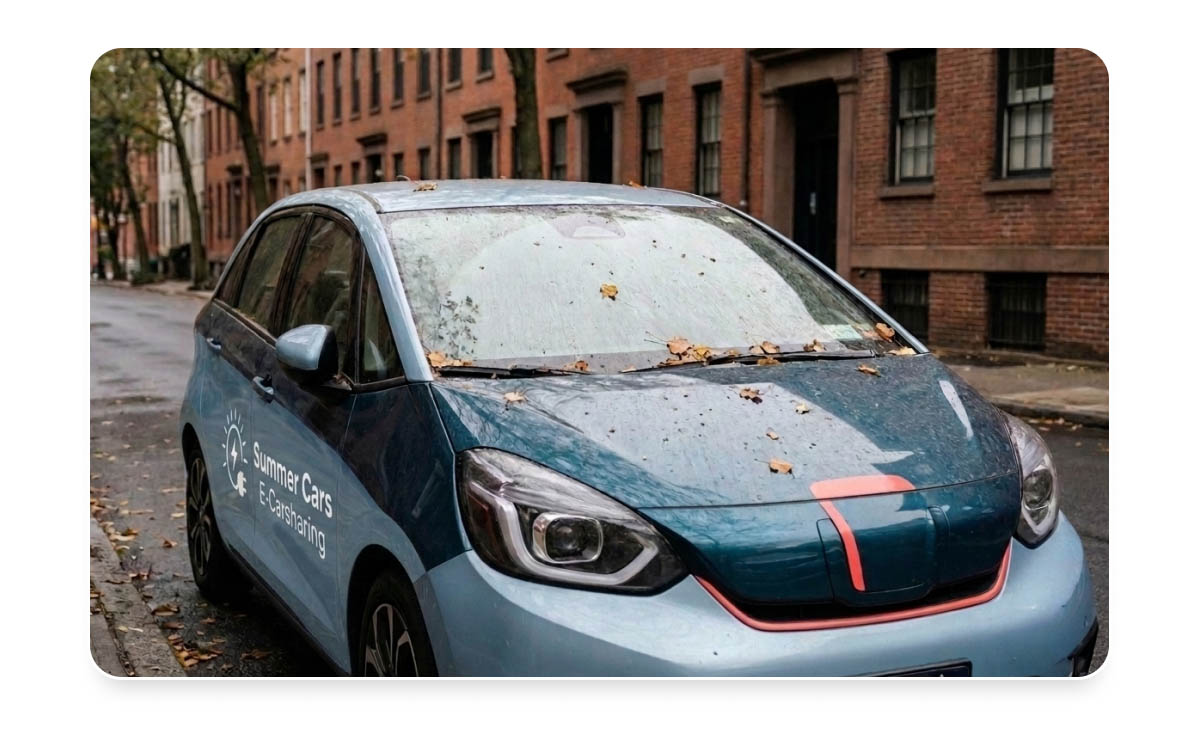
Various examples illustrate what this demand for longer booking periods might look like in practice:
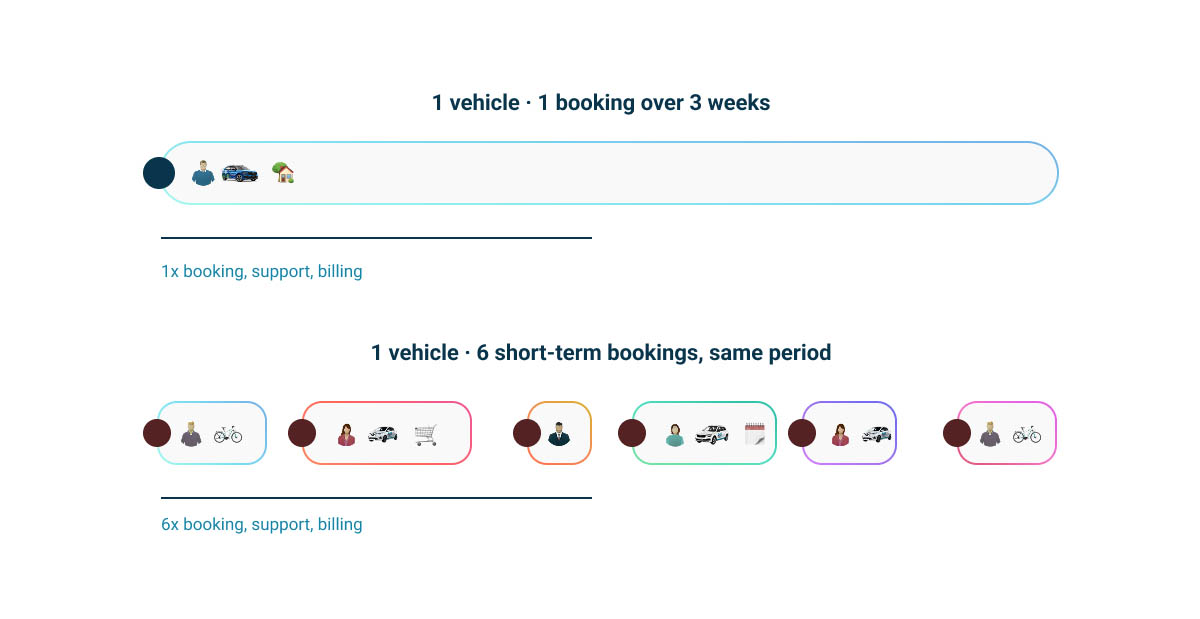
The economic difference between a single long booking and several short ones can be identified in several ways.
As the number of bookings increases, so does the likelihood of support cases arising or the need for cleaning - every handoff is an additional touchpoint where an issue may occur. With a single long-term booking, the number of touchpoints is reduced accordingly, regardless of how long the vehicle is in use.
Many short-term bookings result in more gaps in the booking schedule and more scheduled downtime for cleaning or maintenance. With a continuous long-term booking, this downtime is largely eliminated, which increases the effective utilization rate over the booked period.
An agreed-upon monthly payment is fixed from the outset and is not affected by fluctuations in demand, cancellations, or no-shows for individual short-term bookings. For the provider, this means a lower revenue risk over the entire booking period.
Users who have previously only made short-term booking periods available can, with just a few settings, open up a longer-term booking window without sacrificing the vehicle’s short-term availability. On the MOQO platform, more than 25% of all bookings already last longer than 6 hours.
The platform enables long-term bookings through various settings.
Each provider decides for themselves whether to set a maximum booking duration for a listing - such as hours, days, weeks, months, or years. Without this restriction, bookings can be made for an unlimited period of time.
For long-term reservations, providers can also offer fixed rates that include a set number of kilometers per month (e.g., for business customers who need vehicles for an extended period).
Providers set their own rates for different time units (e.g., minutes, hours, days, or weeks) and can adjust them flexibly at any time.
With tiered time-based rates, prices automatically adjust based on the booking duration. Depending on the rental period, the system automatically selects the most appropriate price tier - ideal, for example, for offering longer trips at progressively lower rates.
For financial protection, a pre-authorization can be set up for each tariff, which temporarily reserves a security amount or deposit on the user's payment method before the trip begins.

By combining short-term and long-term use, it is possible to meet additional demand without compromising the fleet’s overall short-term availability. Those who take this step do not need to expand their fleet or implement new software; instead, they simply use the existing platform for what it is already capable of.
From car dealership to local mobility business: The components for new business models →