4 min read • June 22, 2026
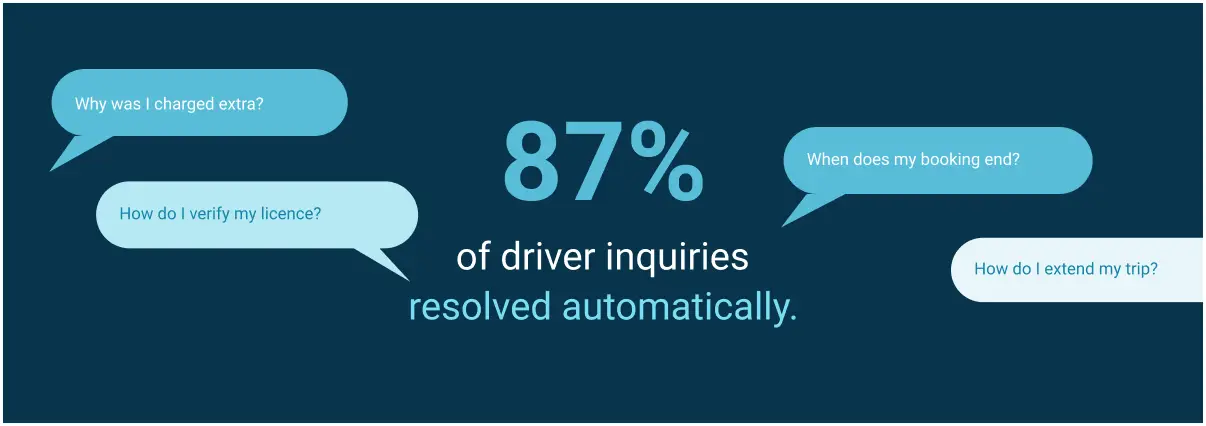
B2C support is one of the most time-intensive parts of running a shared mobility service — and the chatbot handling it makes a bigger difference than most providers realize. In late 2025, MOQO upgraded from a rule-based support chatbot to Fin, an AI-powered agent that now resolves 87% of driver inquiries without any human involvement.
Product
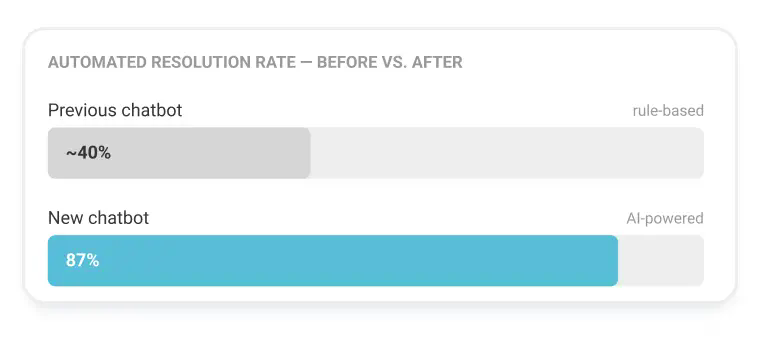
B2C support in shared mobility is high-volume, repetitive, and directly tied to driver satisfaction — making the quality of the chatbot handling it an operational factor most providers underestimate. MOQO upgraded its B2C support chatbot in late 2025, replacing a rule-based system with Fin, an AI-powered agent built into Intercom. Unlike its predecessor, Fin understands natural language, draws on both the MOQO Provider Academy and live platform data, and composes context-specific responses rather than following a fixed script. The result: an automated resolution rate of 87%, compared to approximately 40% with the previous system. Escalations to human agents stand at 13% (as of June 2026). Cases that do require human involvement are handed off with full context already captured, so provider teams can act immediately rather than spend time reconstructing what happened. Complex decisions, damage disputes, and emotionally charged situations remain with human agents — Fin handles everything else.
Every shared mobility provider knows the drill. A driver can't open their booking at 8pm on a Friday. They have a question about a charge they don't recognize. They want to know exactly what happens if they return the vehicle late. They need an answer now and so they reach out to support.
B2C support is one of the biggest time sinks in fleet operations. It's constant, it's repetitive, and it directly shapes how your drivers feel about your service.
That's why we upgraded our B2C support chatbot in late 2025: Moving from a rule-based system to Fin, an AI-powered agent that handles driver inquiries smarter, faster, and with far less need for human intervention.
Our previous chatbot did what rule-based systems do well: it followed structured paths, guided drivers through common questions, and kept things consistent.
Roughly 60% of conversations still ended up with a human agent. Not because the cases were complex, but because the chatbot couldn’t handle them. Because rule-based systems have a ceiling: They work for the questions you anticipate, and struggle with everything else.
On top of that, the previous system had no direct connection to booking or payment data on the MOQO platform. It worked from a static knowledge base, which meant it couldn't factor in a driver's specific situation.

A rule-based chatbot operates on a fixed decision tree. Every possible conversation path is written in advance: if the user says X, show response Y. It's predictable and consistent, but it can only handle what it was explicitly programmed for. Anything outside those predefined paths leads to a handoff to a human, or worse: a dead end.
An AI chatbot works differently. Instead of following a script, it reads through a knowledge base, understands the intent behind a question, and composes an answer. It can handle variations in phrasing, combine information from multiple sources, and respond to questions it hasn't seen before — as long as the relevant information exists somewhere it can access.
For customer support in shared mobility, that distinction is significant. Drivers ask the same broad categories of questions — but rarely in the same way twice. Booking issues, licence verification, fuel transactions and charges are consistently the top topics. Across providers, roughly one in three support requests is a pure information request — something that doesn't require a decision, just the right answer. An AI chatbot can handle that category far more reliably than a rule-based one.
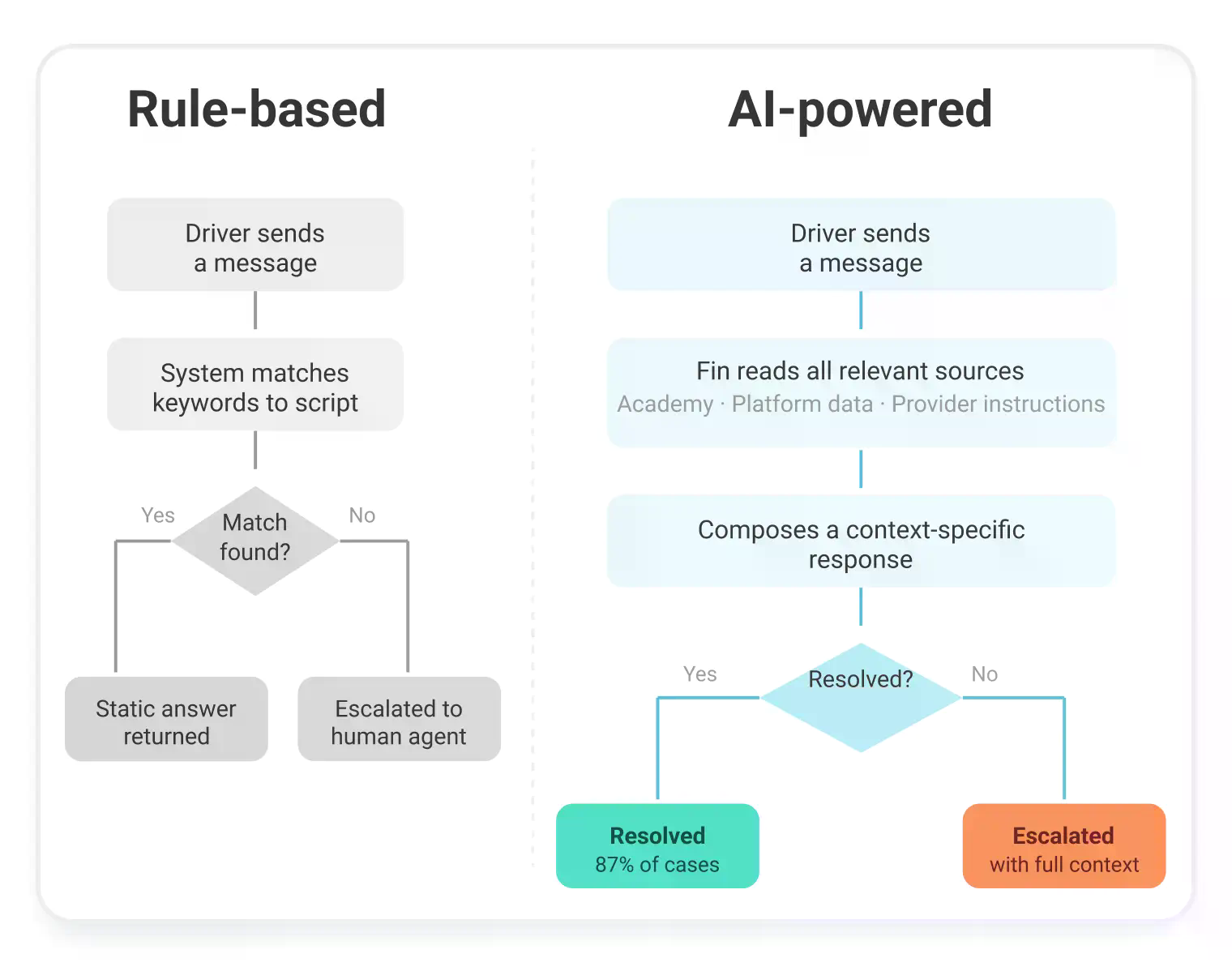
Fin is MOQO's AI support agent, powered by Intercom, that handles B2C driver inquiries on behalf of shared mobility providers. It draws on the MOQO Provider Academy, platform data, and provider-specific instructions to answer driver questions — without involving a human agent for the majority of cases.
Unlike the old system, Fin doesn't follow a script. It reads through the relevant knowledge sources, pulls what it needs, and writes a response in context for that specific conversation.
Platform access
Fin can look up data directly from the MOQO platform like booking details, payment history, and more. When a driver asks about a specific booking, Fin can actually check it. That wasn't possible before.
Provider-specific guidance
Through Custom Support Instructions, you can give Fin your own rules: your cancellation policy, your late return fees, how key handover works for your fleet. Fin uses that context when answering your drivers' questions — so it responds the way you would, not with a generic platform default.
The numbers
Based on MOQO's platform data from June 2026, the automated resolution rate now is at 87% — Fin resolves nearly nine out of ten conversations without involving a human agent. That compares to approximately 40% with the previous system. The escalation rate has dropped from 60 to around 13%.
Conflict preparation
When Fin does escalate, it doesn't just dump a raw conversation on your team. It prepares the case — summarizes what happened, captures the relevant details — so you can respond to the substance of the issue, not spend time piecing together what actually went on.
The resolution center and its “accept, decline or ask for more” workflow →
Nobody on a support team got into this work to answer the same question about booking cancellations forty times a week. That's the stuff Fin takes off the plate.
What it doesn't do is make judgment calls. Damage disputes, billing disagreements, situations where a driver is frustrated and needs someone to actually listen — those still go to a real person. And because Fin has already captured the context by the time it escalates, your team can get straight to the point instead of spending the first five minutes figuring out what happened.
There are also people behind Fin itself. The AI works with what it's given — the knowledge base, the platform data, your support instructions. Keeping that content accurate and up to date is an ongoing task, and that responsibility sits with us and with you.

Less noise in your inbox. Faster answers for your drivers. And a clearer picture of what your support operation actually looks like — because Fin tracks what it resolves, what it escalates, and what drivers are asking about most.
Fin is already active for every provider using MOQO support. If you currently handle B2C support independently and want to explore what Fin could do for your operation, get in touch with your Key Account Manager. And if you're new to MOQO, Fin is available to you from day one.
Why a good complaint management is a strong lever for user retention →