
5 min read • November 18, 2026
There is no substitute for meeting in person – we at MOQO were recently reminded of this when we had the chance to meet the ZEV (Zero Emission Vehicle Cooperative) team face-to-face in Vancouver at the CSA Conference. ZEV is more than just another carsharing client; they are an organization with a profound mission. We take a look at who ZEV is and what drives them.
Best Practice
ZEV was founded 5 years ago to provide underserved and rural communities in the US with access to shared mobility. The team's motivation is deeply personal.
Ruthie Vastine, Deputy Director and ZEV’s first employee, grew up in Philadelphia in a community shaped by longstanding inequities in transportation access and investment. Her family’s reliance on an unreliable vehicle made the relationship between mobility, opportunity, and everyday life tangible from an early age. These experiences, alongside the collective lived experiences of ZEV’s team, inform a deeply community-centered approach to shared mobility. ZEV works alongside communities to challenge inequities in transportation access and build mobility systems that are accessible, responsive, and designed with the people they serve.

The majority of ZEV's vehicles are currently located in urban areas around Seattle, strategically supplemented by rural locations near affordable housing.

As visionary as ZEV's goals are, their day-to-day operations faced significant hurdles in the past. Because ZEV operates as a non-profit and relies heavily on state grants they must provide their funders with detailed utilization data.
With their previous software, this was a massive problem. The required data was hard to access, sometimes encrypted, and required hours of painstakingly compiling information from messy Excel spreadsheets.
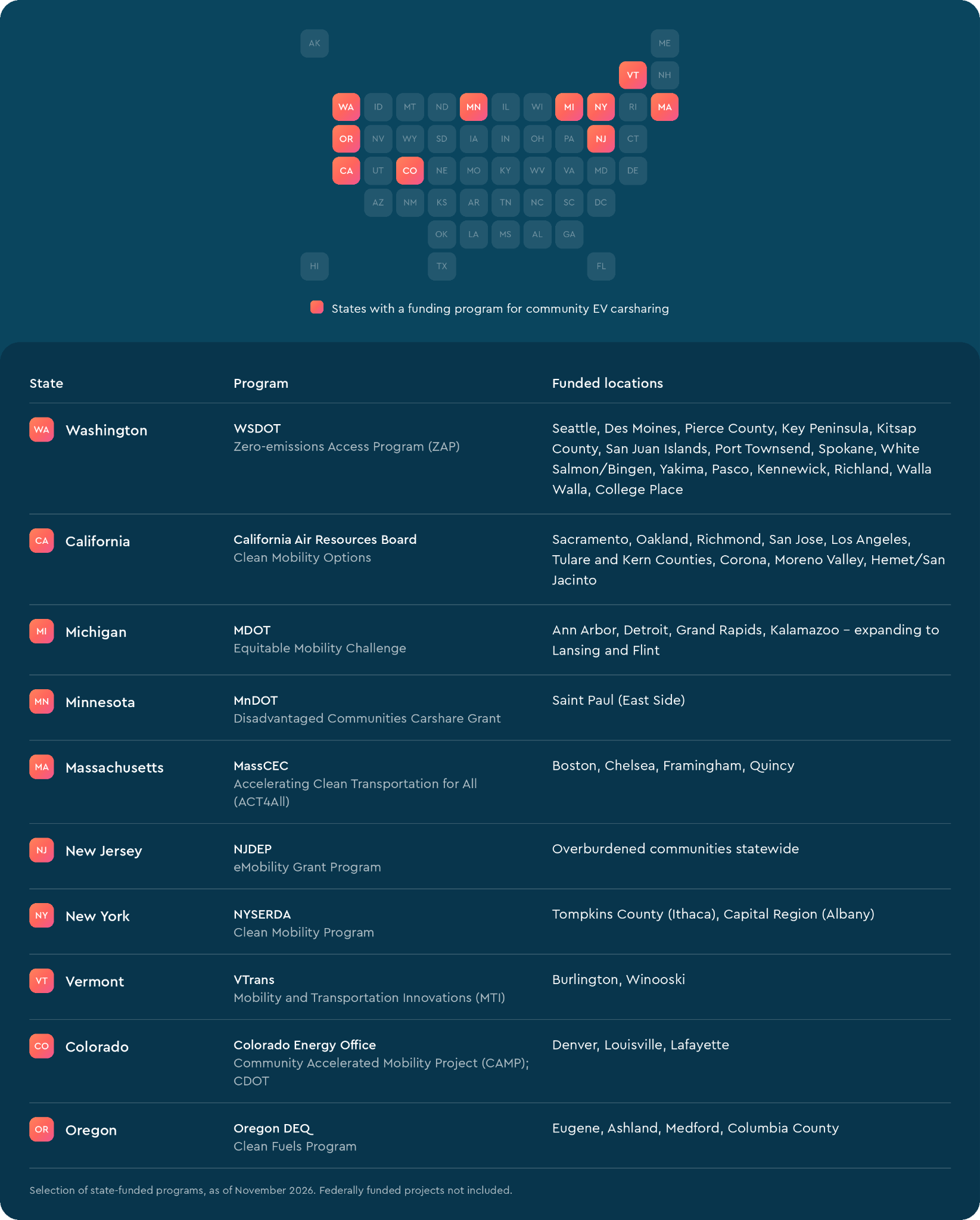
With many federal clean-mobility programs paused since 2025, community EV car sharing now relies mainly on state funding, often from state climate funds, supplemented by utilities and local governments. Here’s where state funding is making it happen:
"MOQO really listened to us and understood our pain points," is how Ruthie summarizes the initial contact. The switch to the MOQO platform brought immediate improvements to ZEV's daily operations:
With the support of strong regional partnerships, including Avista, Department of Ecology, and the Washington State Department of Transportation (WSDOT), alongside a more stable software infrastructure, ZEV is better positioned to deepen its mission and community centered work. ZEV’s approach extends well beyond providing vehicles; the organization is actively engaged in neighborhoods, building relationships, sharing knowledge about local environmental impacts, including PM2.5 exposure near highways, and cultivating meaningful connections that strengthen community resilience and expand access to shared mobility.

