8 min read • December 17, 2025
Successful shared mobility does not thrive on appealing to as broad an audience as possible, but rather on a clear understanding of its own target groups. Which user segments are particularly worthwhile? How do their requirements differ and which messages are most effective? Target group-oriented marketing provides the answers and creates the basis for operating carsharing services more economically, making better use of vehicles, and retaining users more sustainably. This article provides an overview of the most important target groups in carsharing.
Education
This article explains why shared mobility providers should focus on clearly defined target groups instead of broad audiences in their marketing. It highlights the most important segments in carsharing or bikesharing - students, families, companies, tourists, and commuters - and shows how their needs, expectations, and decision criteria differ. By tailoring services, pricing, and communication to these groups and using data, personas, and user feedback to identify local potential, providers can improve vehicle utilization, use marketing budgets more efficiently, retain users long term, and gain a sustainable competitive advantage.
Carsharing is no longer a niche offering, but an integral part of modern mobility. This brings challenges, as the user base is becoming increasingly diverse. Different lifestyles, mobility patterns, and expectations require appropriate approaches - and a suitable product.
Commuters expect high vehicle availability during rush hour, tourists need simple registration and transparent rates, while families tend to look for larger vehicles. These groups have completely different needs and therefore different decision-making factors. Providers who tailor their communication accordingly increase the relevance of their messages and reduce wastage.
In urban areas, carsharing competes not only with direct competitors, but also with public transport, ride-hailing services, e-scooters, and private cars. Target group-oriented marketing helps to develop clear positioning: What specific problem does the offer solve, and for whom?
Smaller or regional carsharing providers in particular often have limited resources. Precise target group definition ensures that marketing investments are used where they have the greatest effect. Instead of broad-based campaigns, segmented measures enable a more targeted approach and higher conversion rates.
Those who understand the needs of their users can not only win them over, but also retain them in the long term. Personalized offers, suitable tariff options, and individually relevant communication - for example, via push notifications or email - increase satisfaction and reduce churn.
3 best practice tips for your marketing as a shared mobility provider →
Students and young people in general are usually particularly open to new services and innovative offerings - including in the area of mobility. Precisely because many students do not own their own car, they welcome options that complement public transportation in the sharing sector.
Although they are initially price-sensitive, they become affluent customers once they enter the job market. It therefore makes sense for providers to think ahead and convince students of their offerings now so that they remain loyal later on.
And that's not all: students quickly become multipliers when they are enthusiastic about a service and recommend it to friends, acquaintances, and family.
Due to students' price sensitivity, you can initially attract this target group with discounts, such as a free ride to get to know your service or refer-a-friend promotions.
Even without discount codes, it is beneficial to offer discounted rates for students to encourage them to use your services. Using the MOQO platform, you can do this by creating a separate offer for students and requesting proof of eligibility, e.g., in the form of a student ID number.
Use subscription groups to target different audiences with just one vehicle pool →
A good way to reach students is directly at the college or university. At the beginning of each semester, there are usually orientation days for first-year students, where you can either set up an information booth or include your flyers with the information material that is handed out to new students on these “freshers' days.” Many of the first-year students may also have just moved to the city and will learn about your sharing offer right at the start of their studies.
In addition, students often spend a lot of time on social media, making social media marketing a good way to reach this target group. You may even find suitable influencers in your city with whom you can collaborate.
How Popcar is gaining new customers with influencer marketing →
The target group of families comprises a large part of the population - and has specific requirements. If you are aware of these and address them, you will gain a relevant competitive advantage.
Care work often leads to chains of journeys rather than linear A-B-A trips. After all, mobility in families is more complex because it takes into account the needs, requirements, and schedules of different people, and is often more multimodal. You can take this into account in your service design, for example, by allowing one-way sharing in addition to round trips - i.e., returning the vehicle to a location other than the pick-up location.
In addition, families with children usually need larger, family-friendly cars - ones that can accommodate not only all family members, but also shopping or luggage, if necessary. Since families often use carsharing for vacations or weekend trips, you can make it easier for them to access the service by offering special rates for weekends or longer periods. Discount campaigns during school vacations could also be a convincing argument.
Another key criterion for families is the availability of child seats. You can either equip vehicles with child seats as standard (indicate this in the respective vehicle description) or offer child seats as an add-on service. The latter is, of course, dependent on your operational capacities.
Incidentally, the issue of child seats is not only relevant to car sharing, but also to bike sharing: the provider WienMobil has now equipped around 10% of its bikes with child seats, enabling parents and caregivers to use the service together with a child.
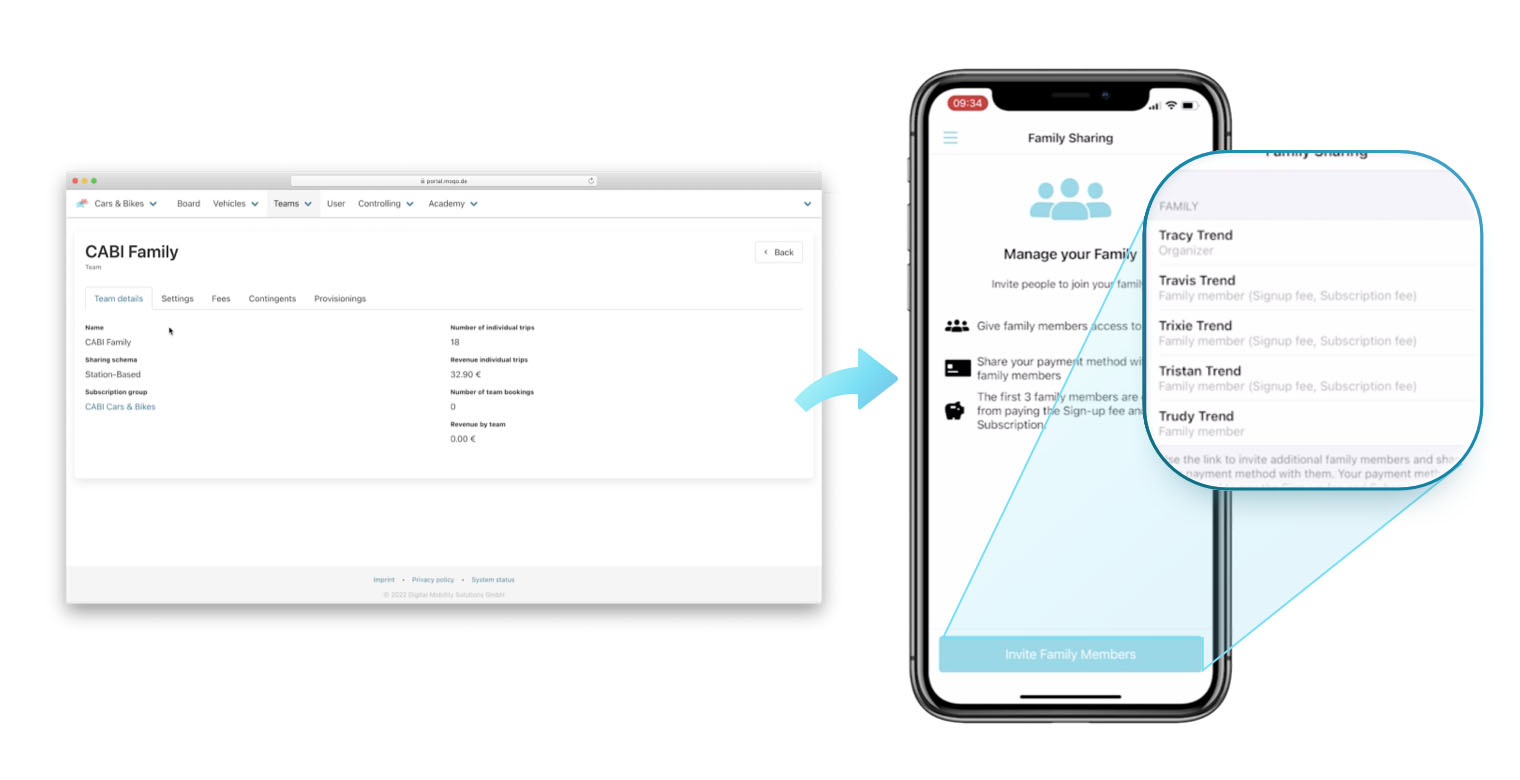
With the help of the MOQO platform's Family Feature, you can give families and their members access to your services: Similar to a family account for streaming services, the family acts as a single unit, with only one payment method used to bill all trips taken by family members. Each family member creates their own profile and goes through the driver's license validation process. Registration and, if applicable, monthly fees usually apply to the entire family and are not charged per family member.
As part of the Go!Family project, the city of Munich automatically sends young parents information material with various discounts and special offers. Perhaps your city has similar opportunities to inform families about your sharing offer.
More about the Go!Family project in Munich →
Alternatively, you can use places where families often gather to distribute flyers or hang up posters, such as kindergartens, pediatricians' offices, playgrounds, elementary schools, etc. You can also advertise on buses and trains.
When communicating, you should emphasize the advantages of sharing options and, for example, compare the costs of sharing with those of owning your own car. Since families have to consider several people when making mobility decisions and find the best solution for everyone, you are likely to be more persuasive with rational arguments than with emotions alone.
Who benefits from carsharing? →
Companies and their employees represent an attractive target group for shared mobility providers. They often have regular mobility needs and are highly trustworthy. For providers, this not only means predictable revenues, but also fewer cases of fraud and damage than in B2C target groups.
Stable revenues thanks to corporate sharing →
There are various options for structuring a B2B cooperation.
One is to place vehicles for exclusive use directly at the company's location. You take care of all vehicle-related services, such as providing the booking platform, maintenance, cleaning, etc., and in return receive compensation - either as a fixed price, based on mileage, or a combination of both.
Alternatively, you can also give companies and other organizations access to your public sharing service. This can be easily set up using the organization feature on the MOQO platform, allowing employees of participating organizations to book vehicles independently and at the company's expense.
What is fundamentally important for B2B customers is clean invoicing. The MOQO platform automatically generates invoices for you in accordance with the principles of proper accounting.
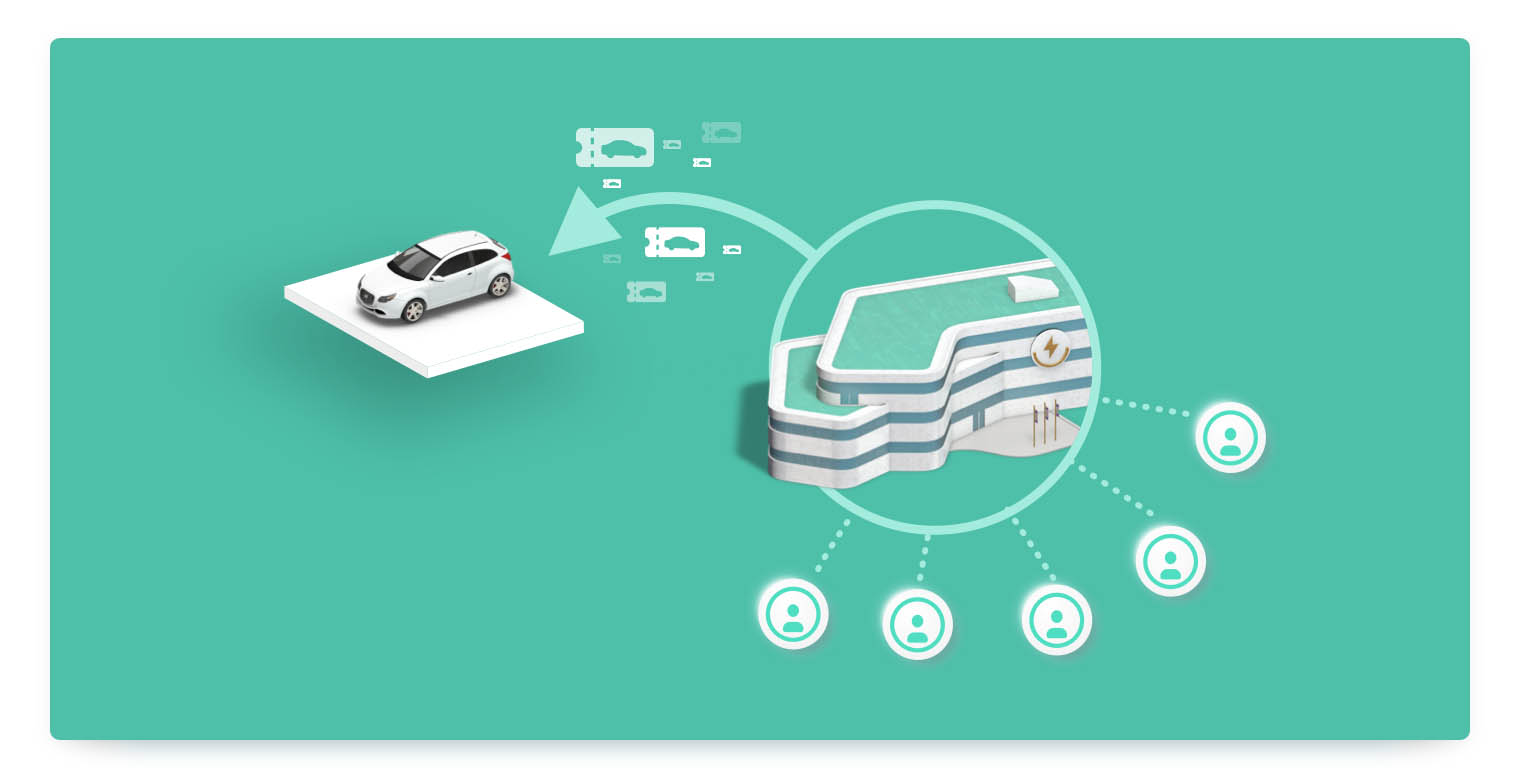
Various channels can be used to attract companies as a target group for your shared mobility offering.
Firstly, the offer on your website should be presented in an informative way and the benefits for companies should be clearly recognizable. Focus on search engine optimization (SEO) for your content so that you can be found. You can also use LinkedIn as a relevant platform, be active there, and place advertisements if necessary.
Other avenues include collaborations with the local Chamber of Commerce or other associations, trade fairs and networking events, or directly approaching relevant companies in your city.
Case Study: How Mainova implements corporate sharing →
Behavioral research has shown that new or changed life situations encourage behavioral change. In a sense, tourists are always in a new and unfamiliar situation at their vacation destination. They have to reorganize their mobility away from their everyday lives, have more time than at home to try new things, and are often more open to doing so while on vacation. These are ideal conditions for attracting tourists as customers - especially if your business is located in a popular tourist destination.
Tourists are also considered valuable multipliers - people are happy to recommend things that leave them with positive memories of their vacation. You can also specifically ask for reviews (in the App Store, on Google, etc.), which also help other potential users find and consider your offer.

For tourists as a target group, it is important that access to your offer is quick and easy. A digital, possibly even automated, driver's license check is an important component of this.
Discount codes are a useful way to motivate tourists to use your services. For example, you can offer a discount for first-time users or provide a discount for the entire duration of their stay.
Depending on the target area of your location, you should also ensure that your communication is multilingual so that tourists from abroad can also find their way around.
Be creative when it comes to targeting tourists and pick them up right at the entrance to their vacation destination: at the airport, at the train station, on booking and information sites, and in cooperation with hotels and other accommodations. You can also advertise in museums, tourist information centers, subways, buses, or at bus stops, as well as at events and functions.
A landing page specifically aimed at tourists and visitors strengthens your SEO and helps you to be noticed and found by your target group. Clearly present both the advantages of your service and all information relating to its use on this page.
Also, team up with hotels and tourist information centers: the staff there should be familiar with your offering and actively promote it. Perhaps you can establish a partnership that benefits all parties.
Around 40% of employees in Germany commute regularly to their place of work (as of June 2024, according to the Federal Employment Agency). This makes commuters a target group with great potential for sharing providers, especially in urban centers or commuter regions.
Provided you manage to meet the specific requirements of this target group with a suitable service structure. For example, commuters have clear expectations in terms of efficiency and reliability: availability, short booking processes, and vehicles at strategic locations are crucial, as are good connections to public transport or commuter parking spaces.
Flinkster: Working with Flinkster to achieve comprehensive connection mobility →

A-to-B sharing is particularly relevant for commuters: the ability to use vehicles flexibly from one location to another without having to return them. This model makes the daily commute much easier and makes the service predictable and convenient. The updated Class Booking feature on the MOQO platform allows station-based one-way sharing to be mapped.
In addition, subscription options and daily or weekly packages that cover commuting needs are also attractive. Reliable availability at central transport hubs such as train stations or subway stations further increases the appeal. Fast and uncomplicated processes in the Driver App ensure that commuting remains stress-free.
Targeted measures for this target group could include:
A landing page specifically for commuters can also help to clearly present the advantages of your service and the use of A-to-B sharing.
Using a data- and feedback-based approach, you can find out which of the target groups described above are particularly relevant for your specific offering at your location. This can include both user groups that already actively use your service and those that still represent untapped potential.
This analysis forms the basis for targeting marketing measures and product adaptations at the identified target groups in the next step.
1. Evaluate existing user data
Booking times, vehicle selection, fare usage, and ride frequency quickly reveal which segments are already active. Data reveals how frequent users, occasional drivers, or specific vehicle preferences differ.
2. Develop customer personas
Based on real data, typical user profiles can be created, such as commuters, students, or business customers. They help to identify needs more clearly and target marketing messages more precisely.
3. Conduct market and competition analysis
A look at local competitors and mobility trends shows which target groups are particularly relevant in the region and where opportunities may lie.
4. Gather user feedback
Short in-app surveys, email questionnaires, or local conversations provide qualitative insights: What motivates users? What are they missing? What would encourage them to use the app more often?
5. Consider regional characteristics
Mobility behavior varies depending on the city: university locations, commuter regions, and tourist destinations each have different target groups. Local factors should therefore always be included in the analysis.
The combination of data, personas, market observation, and user feedback creates a clear picture of the target groups and thus the basis for effective, target group-oriented marketing.

Target group-oriented marketing is not an optional extra for carsharing providers, but crucial for sustainable success. Those who know their user groups inside out - from commuters and students to tourists - can tailor their fleets, tariffs, and communication measures precisely to their needs. Data analysis, personas, user feedback, and regional observations provide the basis for getting the right messages to the right people at the right time.
In this way, providers not only increase the utilization of their vehicles, but also gain satisfied users in the long term and secure a competitive advantage in a dynamic mobility market.