5 min read • July 27, 2026
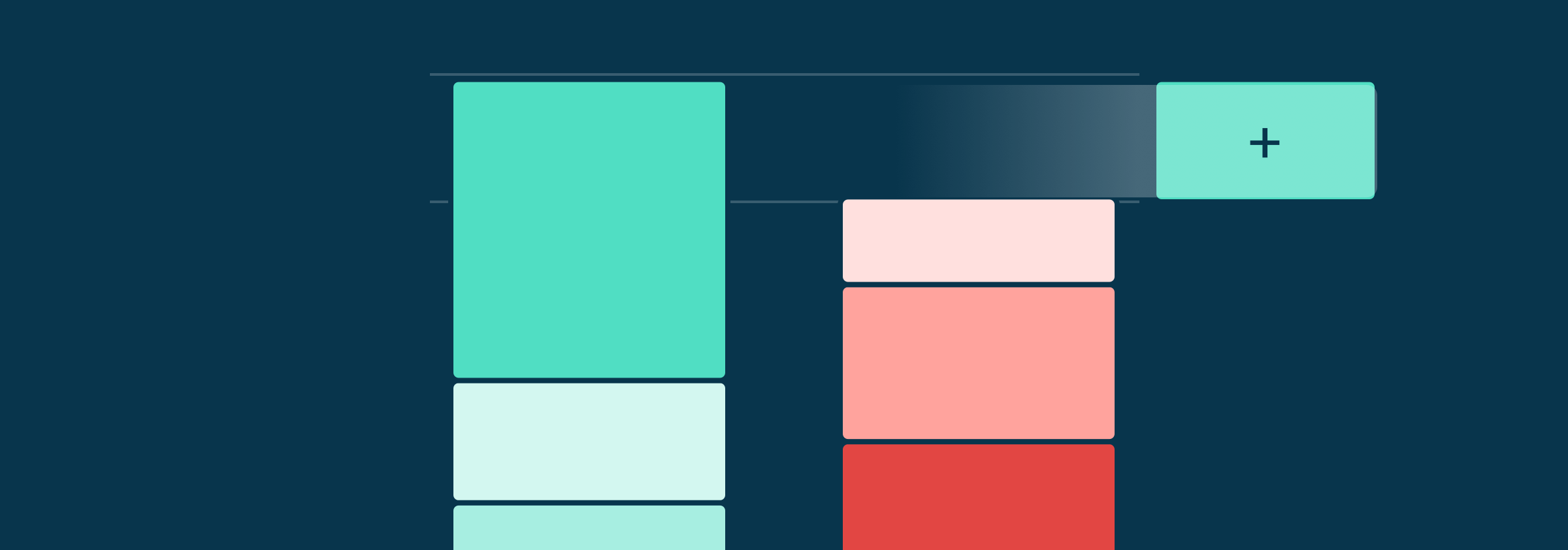
A driver cancels 20 minutes before their booking starts. The slot was blocked, other users couldn't book it — and the revenue comes to zero. What sounds like an isolated incident is a structural problem for many carsharing operators, one that rarely shows up in business calculations. Dynamic cancellation fees are built for exactly this: as a lever that moves cancellations to earlier time windows and limits the damage that remains.
Product
Last-minute cancellations cost more than just the direct booking revenue: every blocked slot that can't be rebooked is also a missed follow-on booking. Flat cancellation fees rarely reflect this damage — especially for longer bookings with higher value. With the new model, carsharing operators can configure multiple time tiers and percentage-based fees on the booking price. This article explains how the model works and how operators can calculate what cancellations have actually been costing them.
The math sounds simple: a booking gets cancelled, the revenue disappears. But the real damage depends on timing. A cancellation 48 hours (or more) in advance still leaves the operator room to fill the slot. A cancellation 20 minutes before start doesn't: the slot was blocked, other requests were turned away, and there's rarely enough time to respond.
That's the real problem that rarely shows up in operator calculations: not just the lost booking price, but the missing time buffer to replace it.
Many operators work with fixed cancellation fees. The problem is conceptual: a flat 10€ fee barely covers the actual damage of a cancelled 240€ weekend booking. At the same time, it seems disproportionately high for a short 30-minute trip.
Flat fees are easy to understand, but they don't reflect actual damage. Their real weakness lies in timing: a flat fee makes no distinction between how far in advance a cancellation happens. Whether the operator still has time to fill the slot or not is irrelevant to the fee.
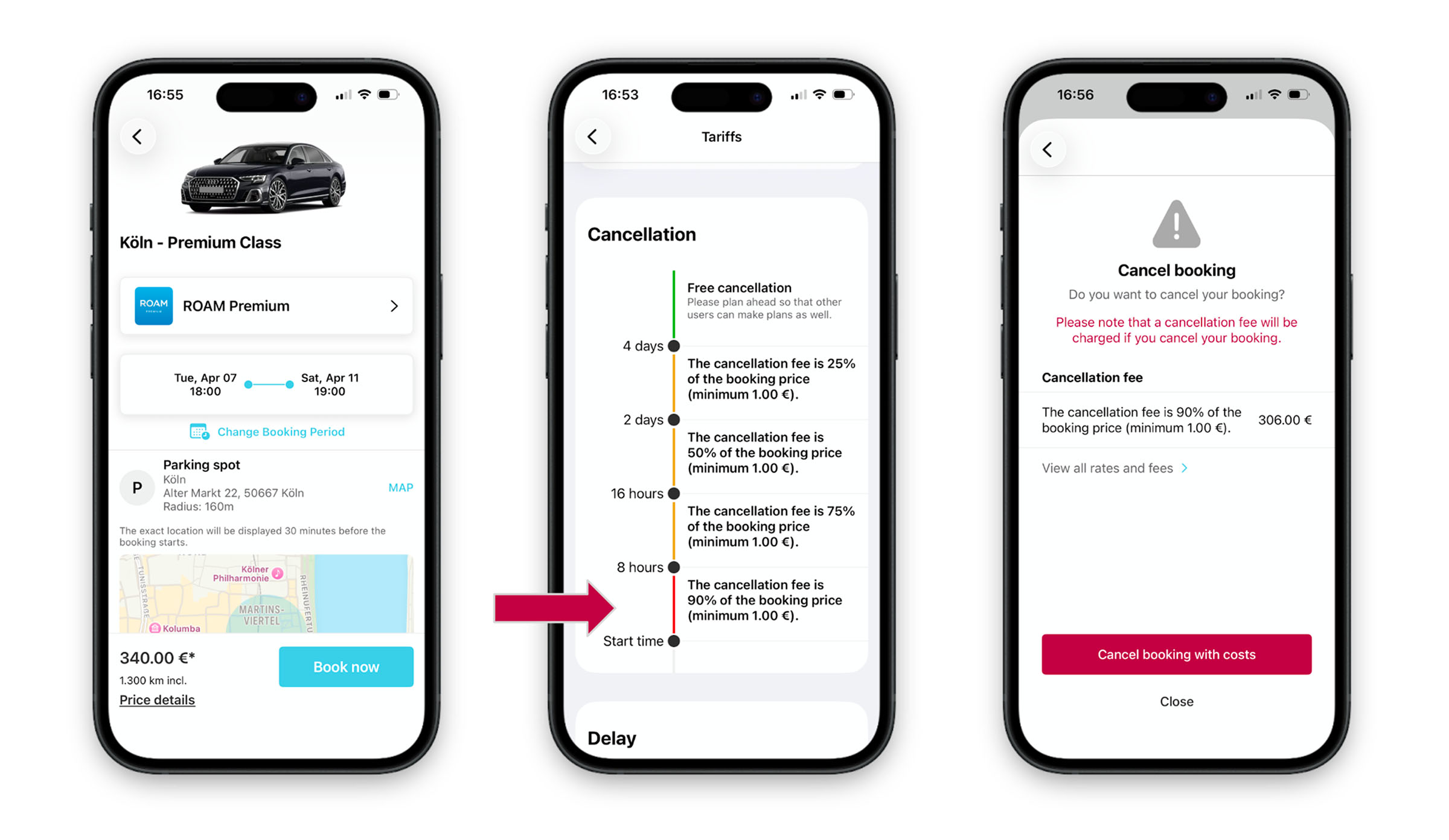
The model replaces the flat fee with a time-tiered, percentage-based calculation. The key features:
Up to four time tiers
Operators can configure different fees for different lead times — for example, a lower fee for cancellations more than 48 hours before the booking starts, and a significantly higher one within 2 hours. Cancelling earlier costs less. The incentive to free up the slot as early as possible is built directly into the fee structure.
The model is also fairer for drivers: the fee scales with the actual booking value, rather than staying the same regardless.
Percentage-based fees with a fixed minimum
The fee is calculated as a percentage of the time-based booking price, with the fixed amount as a floor. The system automatically charges whichever is higher.
An example: fixed amount 10€, percentage 25%. A booking worth 80€ gets cancelled. The percentage-based amount is 20€, so that's what gets charged instead of the flat fee.
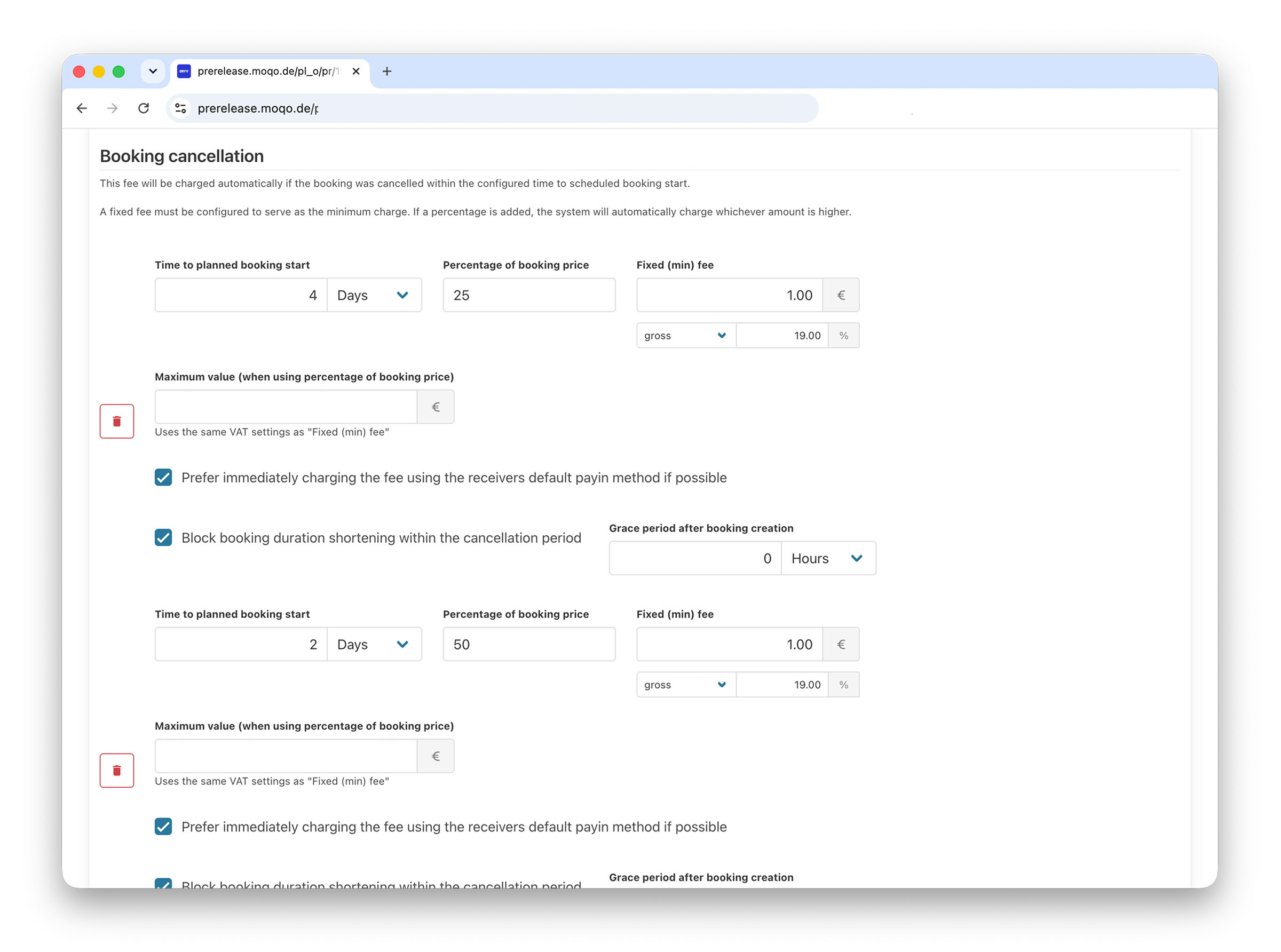
The percentage-based model naturally creates a new incentive: shortening a booking just before the cancellation window begins reduces the booking value and therefore the fee calculation basis.
To prevent this, operators can configure the platform to block any reduction in booking duration once a booking falls within the cancellation window. The fee basis stays stable.
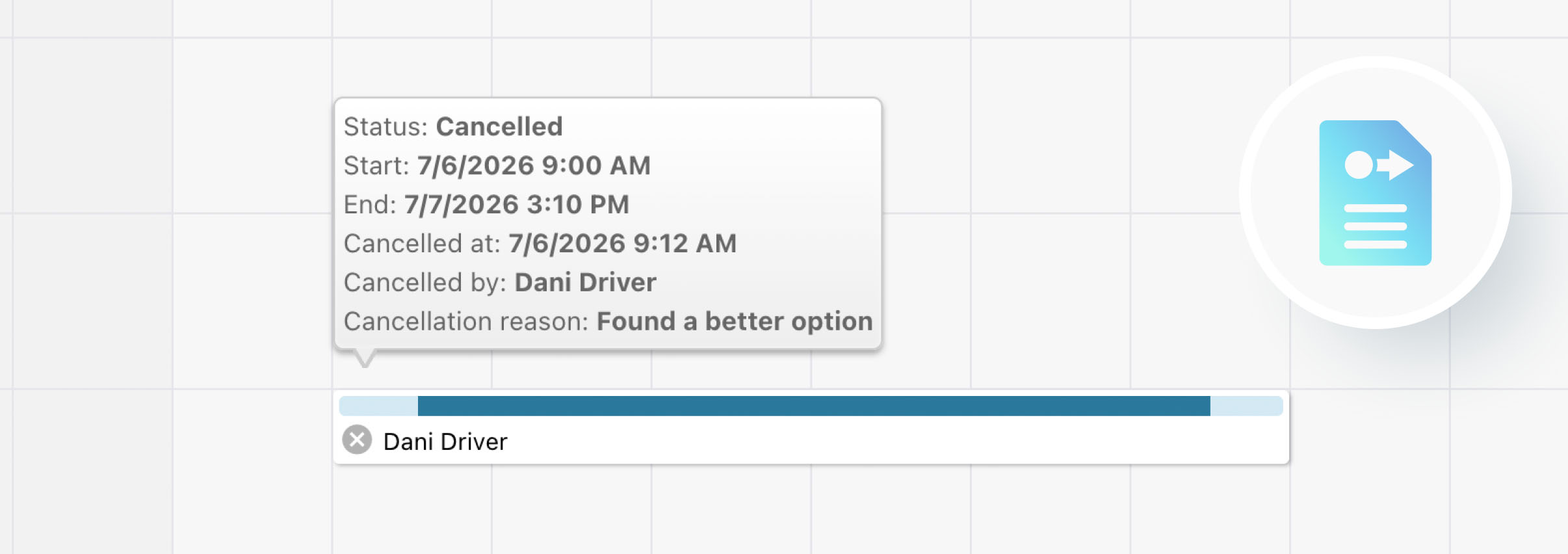
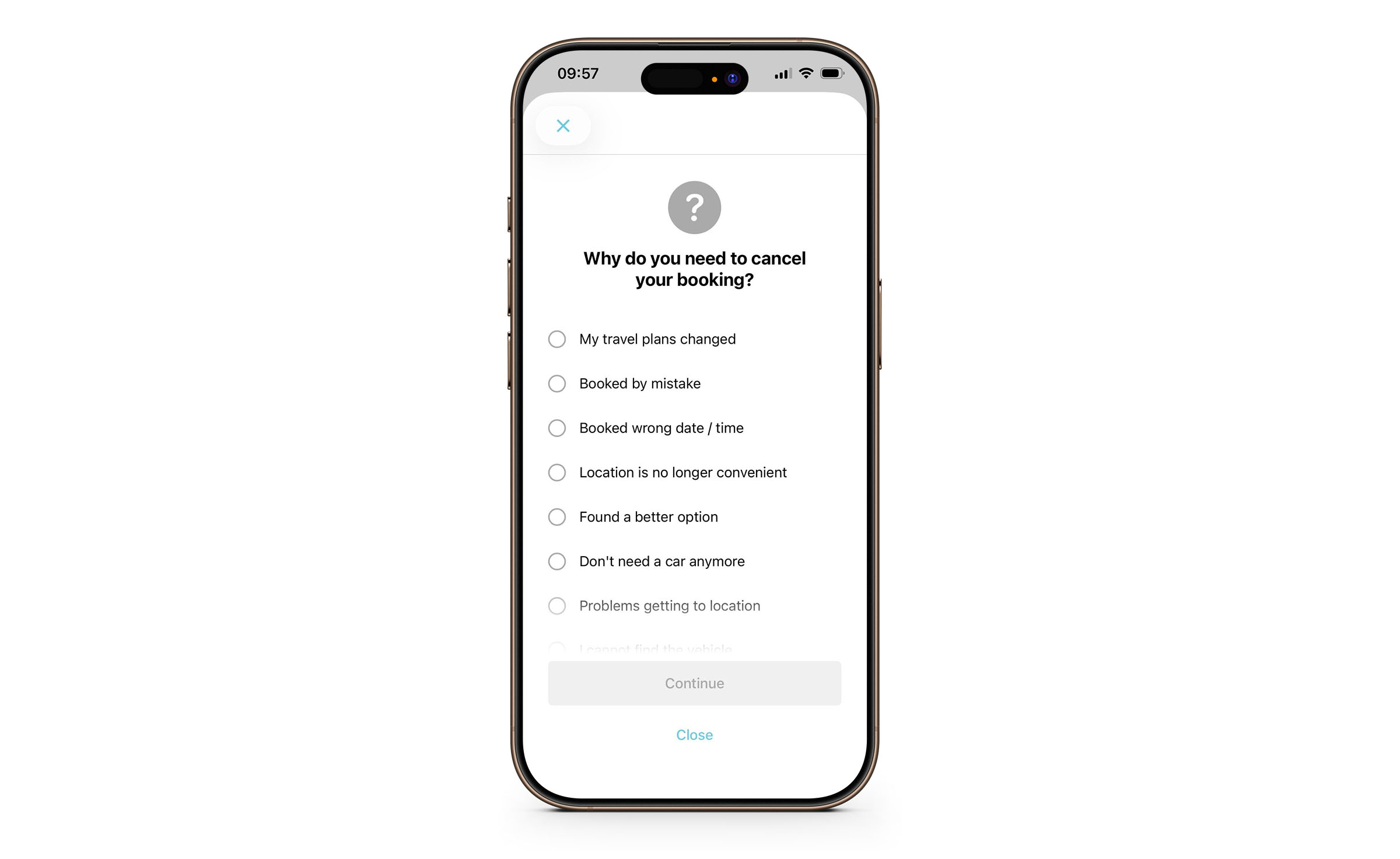
Alongside the fees, drivers are prompted to give a reason when cancelling — from general categories (e.g. "Travel plans changed", "Wrong time booked") or situational reasons when cancelling close to the start time (e.g. "Vehicle not at parking spot", "Vehicle not accessible", "Insufficient fuel/charge level").
This data is visible to operators. Over time, it allows patterns to emerge: which cancellations are the result of operational issues? Where are users cancelling because of changed plans, and where because of specific vehicle problems? This separates avoidable cancellations from unavoidable ones and shows where intervention would actually make a difference.
To configure the new model effectively, start by establishing a baseline: how many bookings are being cancelled within each time window before the start? What's the average booking value of these cancellations? With this data, you can calculate how much revenue has been lost to cancellations — and what a well-configured fee structure could have recovered.

Cancellation fees aren't a punishment mechanism, but a tool for damage control. With a dynamic, percentage-based model, they can be calibrated to reflect actual losses more accurately.
Operators who also analyze cancellation reasons gain a clearer picture of which cancellations stem from operational weaknesses — and which can be actively influenced through a well-designed fee structure.